

Category: General News

  • Annual Leave Buy & Sell Scheme

    Annual Leave Buy & Sell Scheme

    We are pleased to confirm that employees are now able to submit a request under the Annual Leave Buy & Sell Scheme for the 2025/2026 leave year.

    Employees who wish to make a request must familiarise themselves with the Museum’s  Buying & Selling Annual Leave Scheme and complete a Buying & Selling Annual Leave Form. Requests under the scheme will require approval from the employee’s line manager and the People & Culture team.

    Please note the maximum amount of annual leave an employee may buy or sell is the equivalent of one contractual week, however, the total holiday entitlement inclusive of any carry over or purchase of holiday cannot exceed 38 days for full time employees or the equivalent for part time employees.

    If the request to buy or sell annual leave is approved, employees will be notified of the resulting change in their monthly salary. Adjustments in pay as a result of the scheme will commence from April, for a period of 12 months.

    Requests must be received by the People & Culture team by no later than Friday 7 March 2025.

    Requests to Carry Over Annual Leave

    As a reminder, ordinarily untaken leave cannot be carried forward into the next leave year and will be lost. However, in exceptional circumstances a maximum of one contractual week may be carried over from one holiday year to the next. Please note that the total holiday entitlement inclusive of carry over (if approved) cannot exceed 38 days for full time employees or the equivalent for part time employees.

    Approval must be sought from an employee’s line manager and the People & Culture team if an employee wishes to carry forward any annual leave into the next leave year. Employees should complete a Carry Over of Annual Leave Request Form.

    All requests for carry over of annual leave need to be submitted 4 weeks prior to the end of the leave year.

    If a request to carry over annual leave is approved, employees will be notified of this in writing through the return of the Carry Over of Annual Leave Request Form.

    Please refer to the Museum’s  Annual Leave Policy for further information.

    Annual Leave Entitlement on Systems

    Annual leave entitlements will be updated on Myhrtoolkit and Planday in April once all requests for the above have been received and processed.

    If you have any queries in relation to the above, please contact the People & Culture team ([email protected])
  • Lane restrictions on Castle Hill

    Lane restrictions on Castle Hill

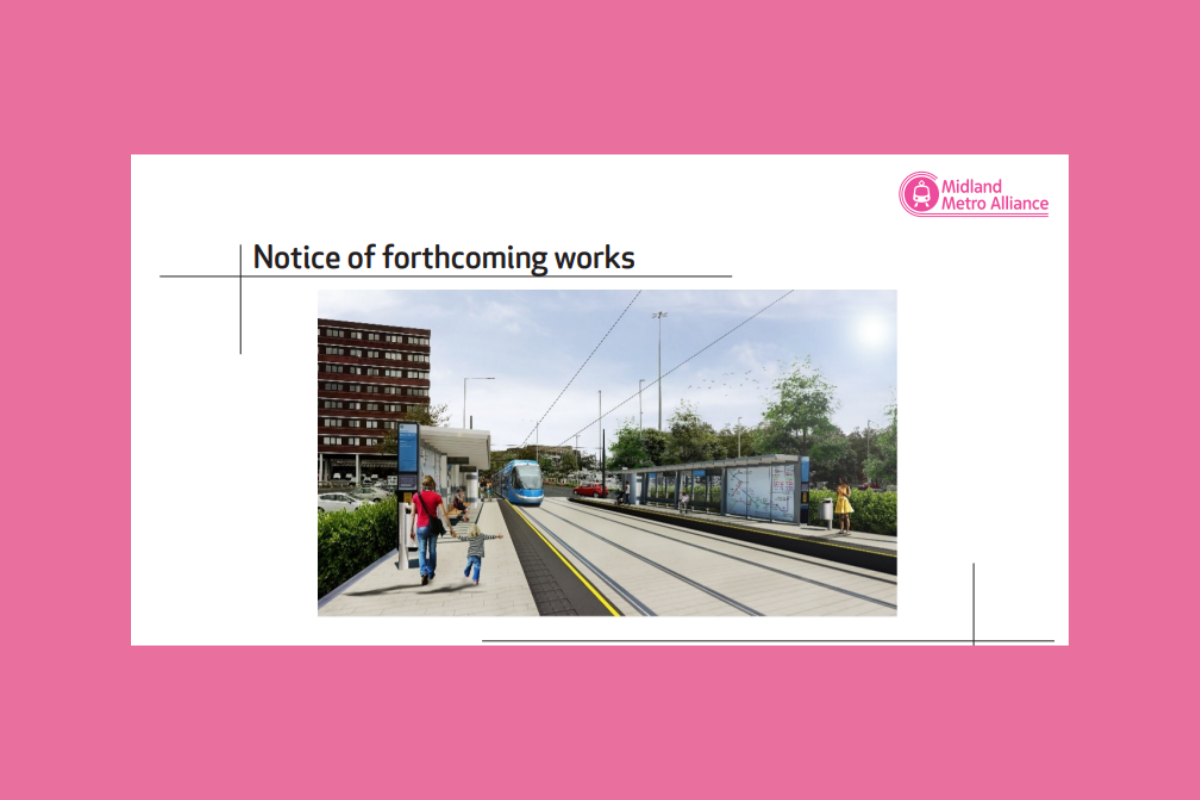
    From Monday 17 February, lane restrictions will be in place on Castle Hill for approximately six weeks as part of the Wednesbury to Brierley Hill Metro extension. Traffic will continue to flow downhill, but the casino side of the road will be closed for around four weeks, followed by a two-week closure on the zoo side, during which there will be no access from Castlegate Island onto Castle Hill. A signed diversion route will be in place.

    Please plan accordingly.

  • Restructuring Proposals: Consultation Stage

    Restructuring Proposals: Consultation Stage

    Dear Colleagues

    This more comprehensive message comes after my brief email on Monday.

    We spent Monday and Tuesday speaking in-person with colleagues whose jobs at the Museum are affected the most by the restructuring proposals I first mentioned at my briefings during RESET in January, taking account of two colleagues on annual leave. It was very important to do this first before sharing the proposals widely. In this context, if you have not had an individual meeting, you can assume that your role at the Museum is not directly affected, by which I mean, your role is not at risk. However, that doesn’t mean certain other roles aren’t affected, more indirectly. These indirect changes – often in line-management – are driven by streamlining the Leadership Team, reducing it from five roles to three, called: (1) Chief Executive; (2) Content & Operations; and (3) Business Development. We are also proposing that we reduce the number of section Heads, from eight to six. This also drives changes in line-management.

    An example of changed line-management includes Team Managers (Historic Characters) reporting into Public Programmes. Another example is a proposal to combine our marketing & audience and development teams under a new post of Head of Development & Communications. Our Costume Team also has proposed new line-management, moving to Interpretation & Collections. There are other examples.

    You’ll see all these proposed changes set-out in the attached proposed organogram.

    There are also examples where individual consultation involves identifying more than one alternative new role, and you’ll appreciate this can add to the complexity of the discussions, selection process and, in time, confirming colleagues in new roles.

    I am also aware that certain roles, whilst remaining in the proposed structure, are vacant. There are examples in the Maintenance Team, Enterprises Team Managers, and Historic Character Team Managers. During the consultation we need to keep open as many vacancies as possible to offer potential alternative employment for the five colleagues at risk. All the time, our approach is to minimise or remove any job losses.

    Attached to this covering message is the briefing pack which was shared with all the colleagues we spoke to earlier this week, as we enter a 30-day consultation. I encourage all colleagues to study it carefully, especially the proposed new organogram. The briefing pack also includes frequently asked questions.

    We will continue to update colleagues as we work through the consultation, listen and respond to views and suggestions, before finalising the staffing structure going forward, including certain new job profiles and the associated salaries. We shall use the Museum’s Intranet, PlanDay and all-staff emails to keep everyone as up to date as we possibly can. Helen Dinsdale, our HR Consultant ([email protected]) is also arranging some open sessions, designed for all colleagues, but especially those impacted less directly by the proposals.

    I recognise that this is a challenging time, including during the next four weeks of consultation, where you may well be working closely alongside colleagues whose jobs are at risk, and I thank you for showing sensitivity, respect and courtesy. It will be enormously appreciated by your colleagues as we continue to open the Museum and head towards our first busy week of 2025, during the February half-term.

    If anything in this note is unclear or if you have any questions, please do not hesitate to get in touch with Helen.

    Andrew

  • Consultation on restructuring proposals – February 2025

    Consultation on restructuring proposals – February 2025

    Dear Colleagues

    I want to let you know the timeline for the staffing restructure consultations commencing this week. Initial individual consultations with each member of staff where their role is affected by the proposals have been scheduled for the first part of this week. I am aware that some colleagues will be on annual leave, and arrangements are being made to take this into account. After individual meetings have been completed, we will issue a comprehensive briefing note to all staff, including FAQs. This will happen by the end of this week. We shall also post information and regular updates on the Museum’s intranet. Throughout this unsettling time, I am more grateful than ever for your commitment to the work of the Museum, and I would once again like to underline that we will seek to minimise or remove any job losses, consulting with staff and Community Union fully during the process.

    Should you have any questions relating to the process, please speak to Helen Dinsdale, the HR Consultant, who will be co-ordinating the process, at [email protected] or 07791 174468.

    Andrew Lovett

  • Neurodiversity survey

    Neurodiversity survey

    The Health and Wellbeing group has designed a survey to better understand the unique perspectives and experiences within our workforce. The goal is to identify opportunities for support, training, and deeper awareness of everyone’s needs, values, and emotions. We’re also keen to explore how neurodiversity may impact individuals—whether it’s yourself, a family member, a friend, or a colleague.
    This survey is 100% ANONYMOUS, we will not be able to see any names or teams.
    Please, scan the QR code below to participate. 
    Neurodiversity survey
  • Irish people in the Black Country – Share your stories!

    Irish people in the Black Country – Share your stories!

    Thanks to everyone who recently attended the Irish Stories workshops during January Reset. For those who weren’t able to attend, the main purpose of the sessions was to introduce some of our interpretation ideas for 2025, and to start collecting stories of Irish people in the Black Country.
    Irish people have been an important part of Black Country history since the nineteenth century. We are aware that many Museum colleagues have connections either through family history or socially with the Irish community in the Black Country, and we would love you to tell us about it! We’re looking for stories, pointers, connections and suggestions.
    If you are interested, please either fill in the questionnaire and drop it off in the Canalside office, or just email us directly at [email protected] or [email protected] (ideally with the subject heading “Irish Stories”).
  • January reset – survey

    January reset – survey

    Dear colleagues,

    A massive thank you to all the presenters for your great contribution during the core Reset days. Your time and effort made a real impact, and we appreciate your support.

    Please find the results of the survey in the following PDF, showing how informative and useful the Reset was for everyone who took part. Your feedback will help shape future sessions, so thank you to everyone who shared their thoughts!

  • Discover Dudley employee discount card 2025

    Discover Dudley employee discount card 2025

    The Discover Dudley employee discount card provides offers and incentives across visitor attractions and venues in the Dudley borough. It is valid until 31 December 2025.

    It has been developed to assist frontline staff in learning more about the visitor attractions and tourism businesses within the borough and to cross-promote the visitor attractions to the visiting public at our venues.

    If you would like to apply for a Discover Dudley employee discount card 2025, please complete the Discovery Dudley Card Application Form 2025 – it will need to be signed by your line manager and the People and Culture team, who will then process.

  • Inclusive presentation tips

    Inclusive presentation tips

    The Inclusive Presentation Tips guide has been produced by the Inclusive Storytelling Working Group to promote inclusive working practices. When presenting to an audience, it is likely that the people in the audience will have a range of access needs and come from a variety of communities. The tips outlined in this document will help you to ensure that your presentation is accessible and inclusive.

    It is also worth considering how you share information before, during and after your presentation, for instance:
    • Consider providing visual materials in advance or in alternative formats (e.g. print outs, large print)
    • If you plan to share the digital version of your slides with colleagues following your presentation, ensure that you use alt text for images (How to write effective alt text – Microsoft Support)

    You may also find the following resources helpful:
    • PowerPoint presentations accessibility rules – Scope for business
    • Advice for making events and presentations accessible – UK Government

    If you have any comments or questions, please speak to the Inclusive Storytelling Working Group co-chairs (Izzy Taylor and Nadia Awal).

  • Inclusive presentation tips

    Inclusive presentation tips

    The Inclusive Presentation Tips guide has been produced by the Inclusive Storytelling Working Group to promote inclusive working practices. When presenting to an audience, it is likely that the people in the audience will have a range of access needs and come from a variety of communities. The tips outlined in this document will help you to ensure that your presentation is accessible and inclusive.

    It is also worth considering how you share information before, during and after your presentation, for instance:
    • Consider providing visual materials in advance or in alternative formats (e.g. print outs, large print)
    • If you plan to share the digital version of your slides with colleagues following your presentation, ensure that you use alt text for images (How to write effective alt text – Microsoft Support)

    You may also find the following resources helpful:
    • PowerPoint presentations accessibility rules – Scope for business
    • Advice for making events and presentations accessible – UK Government

    If you have any comments or questions, please speak to the Inclusive Storytelling Working Group co-chairs (Izzy Taylor and Nadia Awal).