Category: Forging Ahead

  • Black Country Studies Centre launches

    On Wed 21 Nov the Black Country Studies Centre launched.  This new education partnership between the University of Wolverhampton and the Museum will provide new learning opportunities for communities across the Black Country.  The partnerships’s aim is to deliver learning outcomes that will help local people to develop their employability skills, raise aspirations and encourage community cohesion.

    The Centre will offer guest talks, taster courses, student placements and research projects to create unique learning opportunities for the region and which build on the history of the Black Country.

    Commenting on BCSC, Andrew Lovett said, “The Black Country Studies Centre has been created to formalise our current relationship with the University. Together and through a programme of inspirational activities we will continue to explore the history of the area and how that history informs our understanding of ourselves and our communities.”

    Click here to find out more about Black Country Studies Centre.

    Wednesday’s launch evening also included Snidge Scrumpin’ – an experiment to map smell and memory in the Black Country.  Run by the University of Wolverhampton as part of the Being Human Festival 2018, the experiment exposed participants to a range of different smells and asked them about the memories and places they triggered.  The results will be published in January and we hope they can input into the Museum’s interpretation plan for our 1940s-1960s town as part of Forging Ahead.

  • BCLM: Forging Ahead – Halesowen & Hasbury Co-operative

    Our next public call-out for memories and stories to feed into BCLM: Forging Ahead will be for the Number 11, ‘Hawne’ branch of the Halesowen & Hasbury Industrial Co-operative Society on 19 November. Did you or anyone in your family shop at the Stourbridge Road shop in the late 1940s/early 1950s? Do you remember your Halesowen & Hasbury ‘divi’ number and where you collected your share from?  Did you shop at other Halesowen & Hasbury Co-ops? If you have anything you’d like to share, please pop in and see the Collections team in the Rolfe Street offices.


    A bit about the Number 11, ‘Hawne’ branch

    The very first co-operative shop was opened by the Rochdale Pioneers in Toad Lane, Rochdale in 1844.  The Halesowen & Hasbury Industrial Co-operative Society was founded in 1871, opening its first shop in Peckingham Street. By the outbreak of World War One they had five branches. After the war it attempted to expand its operations to embrace the new residential areas in towns like Quinton and Blackheath. The Hawne branch on the Stourbridge Road was its eleventh opening, in 1930, after a strong period of expansion, well positioned to serve the large-scale development of the Short Cross area of Halesowen.  The building, with its distinctive steep pitched roof and square frontage, was designed by local architect, Stanley Beach and built by a local contractor, Mr Tate.


    Why the Co-op, and why this Co-op?

    Co-op shops were popular in the Black Country, stocking household names as well as their own Co-op brands, such as Pelaw Polish, Lutona Cocoa and Silvox beef extract.  Phyllis Taylor, who shopped at the Wollescote branch and later worked at the Colley Gate shop, recalls “They did all their own stuff, Co-op soup and Co-op rice pudding, it was lovely, and it was always a couple of pence cheaper… 99 tea, it was the biggest brand going, we used to sell boxes and boxes.”

    Like all shops, the Co-op was affected by wartime rationing, yet in this period the Co-operative nationally were at the forefront of introducing self-service shopping for the first time. Their first self-service store opened in 1942. The Halesowen & Hasbury Society experimented with self-service in three shops in 1949, one being the Hawne branch. It was promoted as a modern service, customers choosing their own products and not having to wait to be served.  There was some resistance from customers however. George Bishop, manager from 1958 at the Whiteheath, Oldbury branch, part of the Halesowen and Hasbury Society, said “People complained about the loss of personal contact with the introduction of self-service, but they soon got used to it.”


  • Your Museum needs you! Can you help with The Big Give Christmas Challenge?

    Your Museum needs you! Can you help with The Big Give Christmas Challenge?

    We are planning to film a short video on Sun 25 Nov to raise money for BCLM: Forging Ahead as part of the Big Give Christmas Challenge.

    The Big Give Christmas Challenge is a national fundraising campaign in which we have taken part previously to raise money for Racecourse Colliery.  The Big Give is a great campaign as it enables us to potentially double any donations made that week with match-funding.

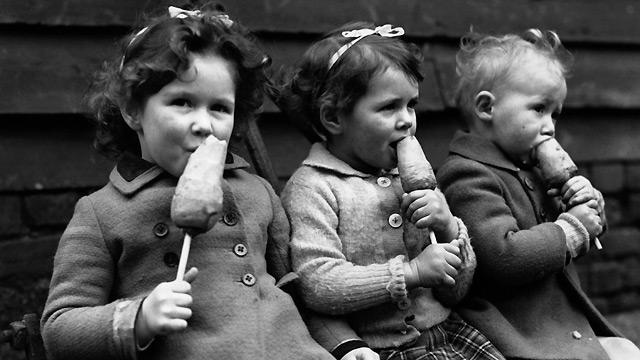
    As the 1940s features prominently as part of our Forging Ahead story, we’d like to film 3 children between the ages of 5-12 years old tasting wartime food and capture their reactions. The video will be used throughout the week of the Big Give campaign to prompt people for donations.

    How can you help?

    If anybody is interested in having a go at preparing some wartime food we can use in the video, we would really appreciate the help! The Collections team have donated some recipes  that we can share with you – apparently potato chocolate spread is a must!

    Also we are looking for anyone who would be happy for their children to take part in the food-tasting and appear in the video.  Participants would need to be available for filming on Sun 25 Nov.

    Please get in touch if you are interested in getting involved in any way.  Email [email protected], extension number 242, or pop in to the Development team above Morralls.

    Many thanks

    Fi Howell

  • All-Team Briefing Follow-up

    All-Team Briefing Follow-up

    Thanks to those who attended one of the all-team briefing sessions; there were some good questions posed at the end.

    The majority of questions related to BCLM: Forging Ahead and so answers to those have now been posted in the Documents section of the intranet (About Us – Strategy & Governance – Forging Ahead – Project Overview – FAQs).

    There was also a question about car park security relating to some recent incidents involving damage to & theft from cars in the car park. I’d like to assure you that these incidents have been reported to the police, that CCTV is in place and that the barriers will be improved to ensure no vehicles can get around them. But, please do remember not to leave valuables on view, ensure your vehicles are locked & use anti-theft devices if you have them.

    Andrew

  • BCLM: Forging Ahead – Woodside Library Call Out

    We’ll be launching our public call-out for memories of Woodside Library – one of the largest translocation projects within BCLM: Forging Ahead – on Wednesday 19 September. Do you have any personal stories or a family connection with the Library? Did you borrow there, study there, or dance there? If you do have anything you would like to share to help our interpretation of the library, please pop in and see the Collections team in the Rolfe Street offices.


    A bit about Woodside Library

    The library was opened in 1894 to serve the south west part of Dudley. The land for the library and Woodside Park were donated by the Earl of Dudley, who also offered help with the funds to build the library out of the takings from his fetes at Dudley Castle. As such the library, and the adjacent police-houses and fire station, were constructed with a covenant limiting it to public use only. The opening ceremony for this, and Netherton library, built at the same time, was on 24th July 1894. The Earl and Countess of Dudley, along with many local dignitaries, processed from Dudley Central Library, to Netherton, to Woodside. The building featured a Reading Room and Lending Library on the ground floor, and a Recreation Room and Retiring Room upstairs, and was intended for the benefit of the working people of the Woodside area. At the beginning, the library was “closed stack” – visitors had to request books from the librarian – but converted to open access in 1934.

    After World War Two, libraries began to modernise and Dudley libraries were at the forefront – they increased their book stocks by 15,000 a year, included paperbacks for the first time and gramophone records, mostly classical music and language learning tools. The upstairs rooms were used for a variety of clubs and societies, and dances hosted by local compere Horace Robinson. The building was refurbished in the early 1970s and operated until 2008.

    Why Woodside Library?

    The building is currently in very poor condition and because of the covenant, has proved very difficult to repurpose. We are therefore proud to be able to salvage this beautiful building and give it a new lease of life. Woodside Library also enables us to continue stories of education and children’s lives, social life and the role of local authorities in everyday life in the Black Country. It will complement some of the other buildings by showing civic life in the post-war period, and provide an architecturally impressive sight in the midst of the new development.

  • BCLM: Forging Ahead – Lea Road Infant Welfare Centre

    To coincide with the seventieth anniversary of the NHS, we’ll be launching our public call-out for memories of Lea Road Infant Welfare Centre tomorrow (18th July). Do you have any personal stories or family connection with the Centre? Were you taken as a child and dosed with cod liver oil? If you do have anything you would like to share to help in our re-creation of the shop, please pop in and see the Collections team in the Rolfe Street offices.

    A bit about Lea Road Infant Welfare Centre

    This centre was opened in 1928 to serve the Penn Fields area of Wolverhampton. It was designed as somewhere for new and expectant mothers to meet, learn about their and their babies’ health, and have their children fed, weighed and vaccinated. Twenty years later, the Centre became part of the new National Health Service. Visitors to Lea Road in the 1950s and 1960s would have found a busy environment, overseen by staff and volunteers. The main hall was a waiting room, but doubled up as a venue for ante-natal and “mothercraft” classes, baby clothes sales, and as a social gathering for new mothers – always with a fresh cup of tea in hand. Worried new mums could receive advice on anything from birthing anaesthetics to family planning – though this was strictly for married women only. Babies were weighed and checked regularly, and vaccinated against a range of diseases. Outbreaks of measles, smallpox and polio still occurred from time to time, and diphtheria was a particular Black Country problem: at points during the 1950s, for example, Coseley was responsible for a third of all cases nationally! Most memorably, the centres also distributed welfare foods: vitamins, bottles of thick, sticky orange juice, tins of National Dried Milk, and the hated cod liver oil.

    Why Lea Road?

    We are rebuilding this centre to tell the story of the birth of the NHS; the influx in junior doctors from countries such as India and Pakistan during the 50s & 60s; the lives of young women and children in this period; and also to help in our understanding of public health in the present day.

  • BCLM: Forging Ahead – E. Minett

    We’ll be launching our public call-out for memories of Wednesbury-based E. Minett ladies’ clothes shop and haberdashery next week (commencing 18th June).

    Do you have any personal stories about the place to shop for Wednesbury’s most fashionable ladies in the 1950s? Did you, your family or friends go there to keep up with the latest trends in the 50s? Did you or anyone you know work there? If you do have anything you would like to share to help in our re-creation of the shop, please pop in and see the Collections team in the Rolfe Street offices.

    A bit about E. Minett

    Founded by Edith Dabbs Minett in the 1920s, E. Minett was known as the place to go for the best dressed ladies of Wednesbury.  Edith started the business in the 1920s in the front room of the family home in Pound Road before opening the shop at 83 Walsall Street.

    Minett’s was a family-run business. Edith’s husband, William, managed the shop’s accounts around the time of the birth of their daughter, Brenda. Brenda started working at the shop as a young girl, earning three pence a week by dusting boxes and assisting with other day-to-day tasks. She started working at Minett’s full-time when she left school and took over with her husband, John Greenhough, and ran the business until it ceased trading in 2006.

    Clothes for the shop were bought on mail order from trade catalogues or from trips to wholesalers in Birmingham.  Brenda prided herself on buying garments in advance for particular customers she had in mind and whom she knew would buy the item as soon as they saw what she had chosen for them.

    The shop operated a ‘20 Week Club’ which allowed customers to pay a 10% deposit for items, reserve them and pay the remainder over a twenty-week period.  The increasing use of this type of credit in the 1950s was popular with British customers, as it made expensive items accessible and contributed to the post-war boom.

    Why E. Minett?

    We will be recreating the shop from 83 Walsall Street, which will be set in the late 1950s, to tell  the story of the post-war revolution in female fashion as well as the changing role of women in society and the 50s economic boom when people ‘never had it so good’.


  • BCLM: Forging Ahead – Elephant & Castle

    We’ll be launching our public call-out for memories and objects relating to the Elephant & Castle in the 1940s-60s next week (commencing 14 May).

    Do you have any personal stories about the pub which stood on the corner of Stafford Street & Cannock Road, Wolverhampton until it was demolished in 2001? Did you or your family and friends drink there? Play dominoes there? Or just use it as a meeting place?

    If you do have anything you would like to share to help in our recreation of the Elephant & Castle – one of the biggest recreations within BCLM: Forging Ahead -, please pop in and see the Collections team in the Rolfe Street offices.


    A bit about the Elephant & Castle

    The Elephant & Castle was the grand Edwardian pub that stood on the corner of Stafford Street and Cannock Road. There had been a pub on that corner since at least 1834, when Samuel Davis, maltster and retail brewer, was licensee. Situated on a main route into town, it must have been a popular coaching inn, and by 1905 its owners, Manchester Brewery Co. (at this point under the chairmanship of John Henry Davies, who also owned the newly-christened Manchester United Football Club), decided to demolish and rebuild it as a magnificent landmark for those coming into Wolverhampton. The pub was designed by J.F. Hickman and H.E. Farmer from Walsall – best known for their cinema and theatre designs – and constructed by Speake & Sons of Stafford Street, Wolverhampton. Its instantly-recognisable green and white frontage – a specialist form of ceramic brickwork known as faience – was constructed by the famous Gibbs and Canning of Tamworth, who built similar terracotta for the Natural History Museum and Royal Albert Hall in London, and well-known Black Country buildings like Horseley Heath Post Office, and the Midland Counties Dairy in Wolverhampton.

    In 1907, Manchester Brewery was taken over by North Worcestershire Breweries, who were in turn acquired by Wolverhampton & Dudley Breweries in 1910, making the Elephant & Castle part of the Banks’s estate. By this time, Wolverhampton & Dudley were rapidly becoming one of the largest breweries in the region, competing with Mitchell’s & Butler’s huge Cape Hill brewery in Smethwick, and William Butler’s Springfield Brewery in Wolverhampton, as well as the multitude of small breweries and home-brew pubs in the Black Country. They went on to acquire other breweries, such as John Rolinson and Sons of Netherton, and the famous Julia Hanson’s of Dudley.

    Little is currently known about The Elephant & Castle’s licensees in the post-war period. We believe that a Sydney Jones was in charge in the 1940s, and Doris May Davies in the 1960s.

    The Elephant & Castle was typical of Edwardian pubs, with a public bar for the working class, and a separate Smoking Room, with slightly higher prices, for the middle classes – that way, managers could drink in the same pub without having to mix with their employees! The pub’s clientele was diverse, however. Wolverhampton was home to many thousands of Irish immigrants during the nineteenth century, many living in the Stafford Street area, and this was reflected by the Elephant & Castle’s Derry-born publican Patrick O’Kane in 1891. After World War Two, as local firms struggled to find the labour they needed, the Irish again formed the largest group of incomers, but they weren’t the only ones: colonial and Commonwealth citizens from India, Pakistan and the Caribbean also heeded the call for workers, and drinkers from all of these nations could be found in the Elephant & Castle. The pub’s sad decline in later years was capped by its unexpected demolition in 2001 – shortly before it could be considered for listing.


    Why the Elephant & Castle?

    It allows us to tell a multitude of stories of Black Country life from the 1940s-60s, including class divisions in pubs, pub games, drinks and stories of migration.

    Upon completion in 2022, visitors will be able to experience life in the post-war by trying a pint in the public bar, retiring to the Smoking Room with a bag of scratchings, or by taking on the regulars at dominoes.


     

  • Opportunity – Get involved in creating sustainable fashion!

    S4S Stitched-Up! Action for Sustainable Fashion is a community activism project run by S4S: a coalition of fashion designers, community groups, activists, academics and makers who are ‘Designing a Sensibility for Sustainable Clothing’ by promoting creative approaches to re-use, repair, recycling and sustainable design on a local, national and global scale.

    S4S Stitched-Up! are running workshops for a research project into sustainable clothing and are currently recruiting for people to take part on the project.  Participants will join  a series of workshops with S4S Stitched-Up! designers to learn new skills, share ideas, make, mend and generally get creative about sustainable clothing.  Workshop places are open to staff and volunteers at the Museum, travel expenses will be paid and there will be a reward of shopping vouchers for taking part in the research.

    BCLM is hosting five workshops on Fridays (day time) from 25 May and workshop participants will be working with vintage patterns and recycled fabrics to make clothing for the 1940s Weekend in July. The project group will explore the approach taken to clothes in the wartime years with the ‘Make do and Mend’ campaign.   Participants will be able to visit the museum during the 1940s weekend with a free day ticket on either 14 or 15 July to wear their newly created items in context .

    The project will ask participants to evaluate how taking part in the workshops has influenced the sustainability of their clothing choices.

    Places are limited so if you want to take part in this exciting project please contact Katie at [email protected] to secure your workshop place.

    S4S Stitched Up! is part of a research project called S4S – Designing a Sensibility for Sustainable Clothing and we are working in partnership with Exeter University and a community group in Penryn, Cornwall, who are also doing workshops. The website is currently under construction, but you can find more information on Twitter, Instagram and Facebook.

    Twitter: @S4sSensibility

    Instagram: s4s_sensibility

    Facebook: https://www.facebook.com/S4sSensibilty/

  • Share a song for Stanton’s

    This Saturday (21st April), colleagues from the Museum will be heading to Dudley’s Fountain Arcade to find the town’s favourite tunes from the 1950s.  We want you, along with people in the local community, to help decide which songs should be played in the recreated Stanton’s at the Museum.

    Drop in at the Fountain Arcade between 10am and 4pm to share your favourite 50s song and contribute to the community play list.

    Everyone is welcome and we’re especially keen to hear from people with personal memories from the 1950s and of Stanton’s Music Shop in Dudley, in particular.  If there’s someone you know with strong memories of era, please bring them along.

    As well as broadcasting live on Black Country Radio between noon and 2pm, we’ll also be hosting Lindy Hop demos and a specialist record collector will play popular tracks from the 1950s to create a fun atmosphere in which people can share their memories.

    Come and see the Community Engagement Manager with co – workers and volunteers this Saturday and be ready to share your song for Stanton’s.