Category: Forging Ahead

  • Forging Ahead Update – 14 Aug

    Forging Ahead Update – 14 Aug

    We’re delighted to announce that work on Forging Ahead will re-commence from w/c 17 August.  Work on the project was put on hold in March due to the Covid pandemic, but we are now in the fortunate position where the work associated with the Pre-Contract Services Agreement can now begin again.

    The most visible sign of work at the early stage of the project will be the construction of hoarding around Cast-Iron Houses as part of their re-location to make way for the new Visitor Centre.

    We will publish a further update on the new schedule for the development in due course, but in the meantime we wanted to let you know that plans to bring the Museum’s story up to the 1960s now have renewed momentum.

  • BCLM Forging Ahead: Burgin’s Newsagent

    Black Country Living Museum are looking for memories from the 1940s – 1960s of Burgin’s Newsagent, Dudley. As part of its ambitious new development project BCLM: Forging Ahead, the Museum will be replicating Burgin’s newsagent’s shop from 167 Wolverhampton Street, Dudley, which until its closure in 2016, was one of the longest running family newsagents in the country.

    The shop was founded by John Burgin (1831-1887), a travelling bookseller from Kidderminster, in 1868. It was an old building, built around 1795 and previously a fishmonger, but it served the family well as a place of business and a family home for John and Mary Burgin, and their eight children. The youngest, Alfred Burgin (1880-1951) took over the shop from his father and ran it until his death in 1951, when his widow Jane took over. Son of Alfred and Jane, John Burgin, married Cynthia Perry in 1954, who began to help her mother-in-law with the running of the shop, later taking over completely until her own retirement in 2016.

    Customers visiting the shop ranged from workmen in local factories (such as Lenny Henry’s father, who cycled there to buy cigarettes) to doctors at the Guest Hospital (including Dr Messiter, who arrived by chauffeured car). The comedian and entertainer Billy Dainty was a childhood friend of John Burgin’s, and visited whenever he came back to Dudley; and before the war Duncan Edwards – who went to Wolverhampton Street School, just behind the shop – visited regularly with his father.

    Burgin’s employed six or seven paper boys from the surrounding area, usually including some from the children’s home in St James’ Road. They covered a wide delivery area stretching from the Priory Estate to Russell’s Hall, including delivering to the council, Dudley College, the Library reading room, and the Guest, Burton Road, and Rosemary Ednam hospitals.

    To help us to recreate this long serving newsagent, we would love to talk to anyone with memories of the shop. Did you buy your newspapers or sweets at Burgin’s newsagents? Were you a paperboy for Burgins? Can you tell us what it was like inside the shop or the home? Do you have any photographs of the shop in the post-war decades?

    Please get in touch with us by emailing [email protected] or call 0121 557 9643.

    For more information about BCLM: Forging Ahead, please visit www.bclm.com/forgingahead

  • BCLM Forging Ahead: Langer’s Army and Navy Stores

    Black Country Living Museum is looking for memories from the 1960s of Langer’s Army and Navy Stores, Stourbridge as part of its ambitious new development project BCLM: Forging Ahead. The shop will be recreated and set in 1963 as part of the new 1940s to 1960s town providing the opportunity for visitors to learn about the impact of World War II in the Black Country, the experiences of prisoners of war and the buying and selling of military surplus.

    Langer’s Army and Navy Stores was opened at 55 Enville Street in 1953 by Herbert Langer, a former German prisoner of war who decided to return to the Black Country after the war. The shop had distinctive signage featuring a soldier, sailor and airman, as well as large outdoor displays of goods that would take hours for Mr Langer to put up and take down.

    A huge amount of military surplus became available in the years following World War II and the Korean War, which caused a boom in the military surplus trade. There were large numbers of uniforms available, which retailers such as Langer’s could buy in bulk at auction to sell on to customers seeking affordable but good quality clothing, often for workwear. Langer’s also sold items such as work gloves for workers in local factories alongside household items such as buckets, baths and brooms.

    Herbert Langer was born in 1925 in Berlin, Germany. He trained as a chef during the 1940s and was conscripted into the German army towards the end of the war. He was shot in the left knee in battle and was captured and imprisoned initially in Texas, USA before being transferred by boat to a POW camp on Bromley Lane, Wordsley. Whilst imprisoned, Herbert became the camp chef and was, like many prisoners, involved in an informal trade in military equipment and clothing.

    The Bromley Lane camp was an open camp, occupied first by Italian then German prisoners. Inmates were able to go out and work for one shilling a week. Whilst many of his fellow prisoners worked at local glassworks or brickworks, Herbert took on a job caring for the grounds of Wordsley Rectory. He was later allowed to live in an outbuilding there, in the care of Reverend R. H. Fowler.

    At the end of the war, Herbert was repatriated to Germany but he missed the Black Country so much that he returned after two years. He became a naturalised British citizen in 1954.  In 1949 Mr Langer was deployed to work in Billy Evan’s Hardware Store, Cradley Heath. In 1952, Billy Evans opened another store at 55 Enville Street selling hardware, workwear and haberdashery yet died six months after the shop had opened. Langer purchased the shop in 1953 from Mr Evans’ widow and renamed it Langer’s Army and Navy Stores. He met his wife Annie in the late 1950s, they married in December 1970 and had their son, Steven, in 1971.

    The store traded for around 60 years, eventually expanding into the neighbouring terrace, through to 63 Enville Street. Herbert Langer died in 2004, aged 79. The shop building has now been demolished, replaced by retirement homes. The business has moved to Comberton Hill Kidderminster where Steven Langer, Herbert’s son, continues to trade

    To help us in our recreation, we would love to talk to anyone with memories of Langer’s. Do you remember the shop? Did you buy military surplus or workwear there? Do you remember Herbert Langer?

    Please get in touch with us by emailing [email protected] or call 0121 557 9643.

    For more information about BCLM: Forging Ahead, please visit: www.bclm.com/forgingahead.

  • BCLM: Forging Ahead – Spring Hill Post Office

    We are looking for memories of Spring Hill Post Office, Wolverhampton in the mid 1960s so that we can recreate it in our new 1940s-60s historic town.

    What we need & how to contact us

    To help us in our recreation, we would love to talk to anyone with memories of the Post Office. Do you remember Spring Hill Post Office? Did you buy, or post, your Christmas cards there? Did you buy any models in the shop? Do you remember Stan Nettleton, who ran the Post Office in the 1960s?

    This building has so many stories to tell, so if you or anyone you know remembers Spring Hill Post Office during this period, please speak to a member of the Collections Care team or get in touch via

  • Forging Ahead Update – December

    Huw Davies, Project Manager for Forging Ahead, gives us an update on what’s happened in December and what’s to come in January on the Forging Ahead project.

  • Forging Ahead – Update

    Huw Davies, Project Manager for Forging Ahead, gives us a brief update on where we are with the project including the tendering process and building works.

  • Black History Month Event: When I came to England

    Join us on Thursday 24 October for a celebration of Black History, where you will have the opportunity to listen to Z. Nia Reynolds, author, cultural curator and filmmaker.

    Her book ‘When I came to England’ portrays an oral history anthology of life in Britain during the 1950s and 1960s told by those who came in search of life, love and lifestyle…a long way from home. Full of hope, humour and honesty, this gives a fascinating insight into post-war British society. This event will inform and support the collection of Migration stories as part of our major development project, BCLM: Forging Ahead.

    Following the interval, we will host an authentic fashion show featuring garments worn during the 50’s and the swinging 60s. This fashion show gives an insight about the lives of Black people arriving in Britain at that time. Samantha Prescott, Artistic Director and Founder of ‘Fashion, Talent & Black History Showcase’ will share an informative account of what it was like for migrant communities at the time.

    Time: 7.00-10.30 pm

    For more information, and to book your place, please contact: Glenis Williams, Community Engagement Manager [email protected]

  • BCLM Forging Ahead: Laurie Thomas Hairdressers

    Black Country Living Museum is looking for memories from the 1950s of Laurie Thomas hairdressers – a barbers and ladies salon based in Burnt Tree, Tividale Road, Tipton. The Museum plans to recreate the hairdressers as part of its ambitious new development project BCLM: Forging Ahead.

    The recreated hairdressers will be set in 1956, and visitors will be able to learn about the growth of hairdressing, the rise of popular fashions and the changing role of women in society.

    Established in 1904, Laurie’s was well-known and much-loved within the local community.  The shop was opened by Joseph Thomas and was taken over by his son, Laurence Arden Roland Thomas, known to many as ‘Laurie’. The family tradition has been carried on with Laurie’s grandson running a traditional barbers to this day.

    Laurie’s shop was small but bustling, with only two chairs for cuts. After Laurie married Phyllis Orton in 1933, she went to Birmingham College to study hairdressing and opened up a ladies’ salon in the back room. She was later joined in the business by her daughter, Kay.

    The Thomases had a familial relationship with their customers; generations of families came through the shop doors, some of whom still go to the barbers to this day. Laurie was well known locally as a ‘character’ and was loved by everyone. He was always happy to help those in need and he had dreamed of working as a doctor but could not afford the training – however, his medical knowledge saved both his daughter’s life and that of a car accident victim. Male customers would be offered refreshments on busy Saturdays and on special occasions. Laurie also placed a radio on the top shelf in the window and brought out a television for customers to follow key events, such as the cup final. Ladies were offered tea and biscuits upon arrival and Phyllis would often put extra groceries into customer’s bags if she knew they needed them. Kay spent much of her childhood in the shop. She enjoyed the attention she received from Phyllis’ customers, and called many of them ‘aunty’.

    The post-war period saw new styles emerge in leading salons, often based around shorter hair than had been common before the war. However, this required more frequent, expensive haircuts and treatments. Therefore, in an age of austerity these styles were slower to catch on in areas such as the Black Country. The 1950s and 1960s saw tremendous growth in the hairdressing trade with working class women increasingly using hairdressers, spending more on their personal appearance than ever before.

    To help us in our recreation, we would love to talk to anyone with memories of the hairdressers. Do you remember Laurie Thomases? Did you or your parents go there to get the latest hair cut?

    Please get in touch with us by emailing: [email protected]  or call 0121 557 9643.

    For more information about BCLM: Forging Ahead, please visit: www.bclm.com/forgingahead .

  • BCLM: Forging Ahead – Dudley Civic Restaurant

    Black Country Living Museum is looking for memories from the 1940s to the 1950s of the Civic Restaurant that once stood on the corner of Fisher Street and Birmingham Street in Dudley from 1948 until the 1980s. The Museum plans to recreate the restaurant as part of its ambitious new development project BCLM: Forging Ahead. 

    The recreated restaurant will offer visitors to the Museum a chance to taste post-war life including National Bread and steamed jam puddings plus hearty British dinners highlighting the shortages and challenges of eating well in post war Britain.

    Purpose built in 1948 the Civic Restaurant in Dudley was part of a government led initiative to change popular wartime British restaurants into civic restaurants. These aimed to provide affordable and nutritious food without diners needing to use their precious personal rations and was particularly important in the Black Country as many companies were too small to run canteens for their workers.

    Prior to this, most British Restaurants had been located in makeshift venues like church halls, town halls and school buildings. Dudley’s were in church halls at St John’s Kate’s Hill, King Street Methodist, and St Christopher’s, on the Wren’s Nest estate. But a handful of councils looked at Civic Restaurants as an opportunity to build brand new, modern and efficient restaurants – Dudley was one of this pioneering group.

    The Civic Restaurant, built by the bus station to a modern pre-cast concrete design, was designed for mass dining, serving midday dinners, coffees, teas and evening meals for to up to 200 people at a time. The restaurant featured an open plan kitchen, a mural designed by local students from Dudley Technical College, coffee room and a terrace. In later years it was also hired out for private functions, dances and wedding receptions.

    Dudley’s Central Civic Restaurant was a great success to begin with, but as more prosperous times came to the Black Country, diners began to look elsewhere for less basic cuisine, and the restaurant began to struggle. Despite a revamp in 1954 as the Ednam Restaurant, with new menus, jukeboxes, and carpets, by 1956 it had become unprofitable, and closed later that year. The building was then used for several different council purposes following its closure, most notable as the home of the Black Country Museum Development Office from 1975-1984. The building was eventually demolished to make way for Dudley’s new bus station with many fixtures and fittings sold at public auction.

    Do you have memories of dining or attending a function in the restaurant in the 1940s to 1950s? Did you or anyone in your family eat, join in a celebration or work in the Civic restaurant? Can you remember the food, the decoration or even the mural?

    Please get in touch with us by emailing [email protected] or by calling 0121 557 9643.  For more information, visit www.bclm.com/forgingahead

  • School’s out for Summer!

    BCLM Community Roadshow continues to travel far and wide and will be at the International Glass Festival on Saturday 24 August and Moseley Folk & Arts Festival from 30 August to 1 September.

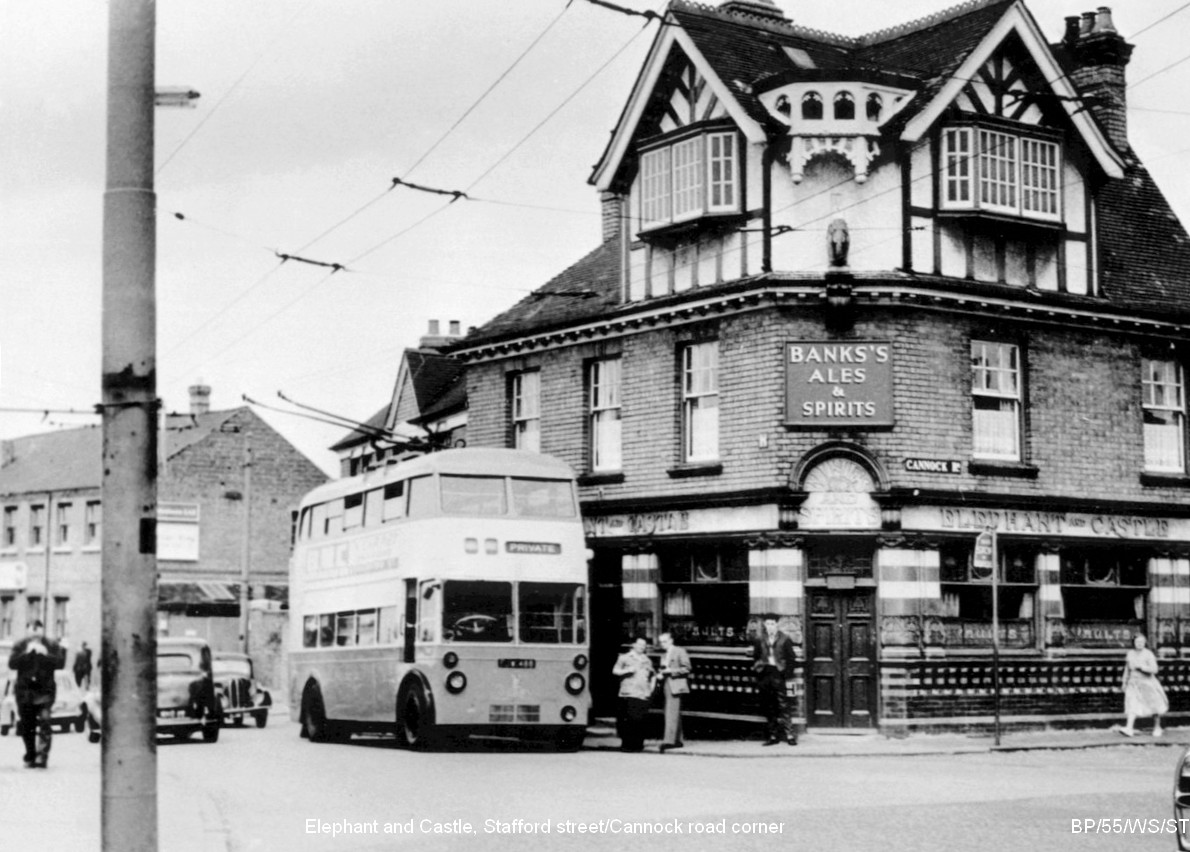
    We’re still on the lookout for memories from local people about the Elephant and Castle Pub and Stanton’s Record and Music shop.

    Music and cultural festivals feature throughout our Community Roadshow programme reaching a broad spectrum of diverse communities. We look forward to having a presence at Moseley Folk & Arts Festival for the first time, where we will be sharing Black County skills in the heart of Moseley Village.

    If you wish to get involved, please contact Community Engagement Assistant [email protected] for more information.