

Category: Forging Ahead

  • BCLM: Forging Ahead – Marsh & Baxters Call Out

    BCLM: Forging Ahead – Marsh & Baxters Call Out

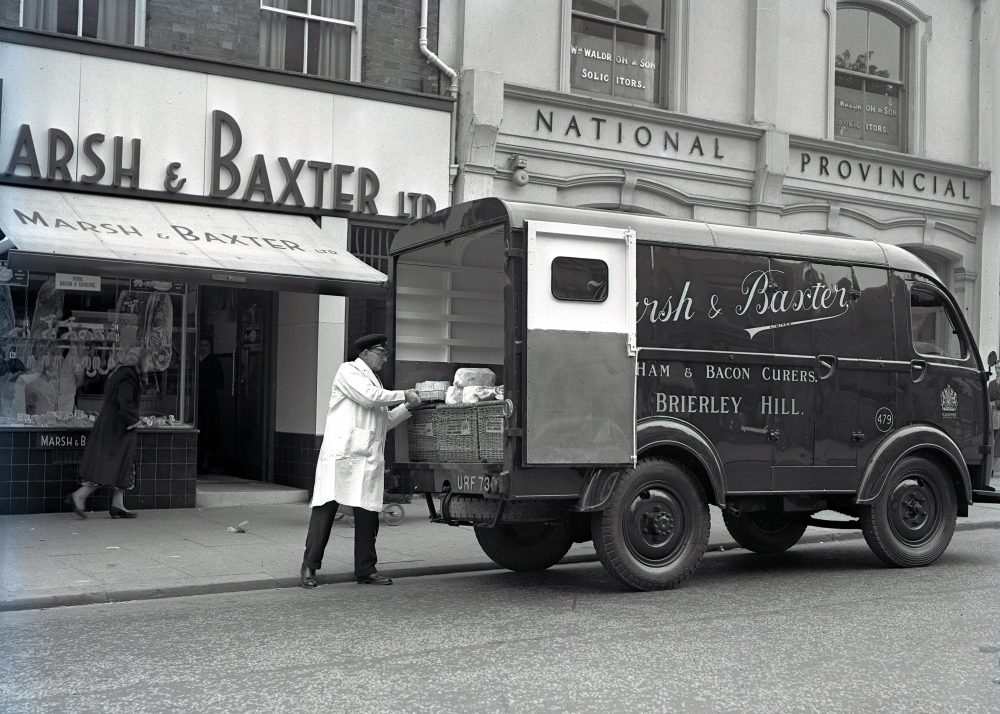
    We’ll be launching our public call-out for memories and objects relating to the Brierley Hill branch of Marsh & Baxter’s Pork Butchers’ Shop between the 40s-60s on Monday 16 April.

    Do have any personal stories about Marsh & Baxter’s? Did you or anyone in your family work in a Marsh & Baxter’s branch? Did you or your family shop there in the 1950s?

    If you, or anyone you know has anything you would like to share to help in our recreation of the Pork Butchers’ shop, inside and out, please pop in and see the Collections team in the Rolfe Street offices.


    A bit about Marsh & Baxter’s

    In 1871, Alfred Marsh purchased a butcher’s shop on Brierley Hill High Street and soon set about curing his own ham and bacon at a small factory nearby, in Hall Street. In the nineteenth century and well into the twentieth, the industry was very specialised: butchers might be general butchers selling beef and game, poulterers selling chicken, or pork butchers selling sausages, hams and other pork products. Marsh would have had plenty of competition: there were fifteen butchers’ shops in Brierley Hill alone in 1880.

    Marsh’s products proved very popular, and he soon looked to expand his business. He did this first of all by mechanizing his production process, introducing machinery and refrigeration to the factory to enable production of bacon, sausages, hams and pork pies on an industrial scale, all year round. In 1912, Marsh took over A.R. Baxter’s meat processing factory in Dale End, Birmingham and another five shops, gained a royal warrant, and rapidly grew into probably the biggest firm of its type in the country – even bigger than its local competitor, Dudley Port’s Palethorpes. The Hall Street factory grew to dominate the Brierley Hill skyline and provided work for thousands of locals: it had ten curing houses with a capacity of 60,000 hams, an ice plant, a huge fleet of delivery vehicles, and dedicated tunnels from the Stourbridge Canal and the firm’s own railway siding, through which pigs arrived.

    We will be recreating the smaller of Marsh & Baxter’s two butchers shops in Brierley Hill, from 70 High Street – a typical store, set in the early 1950s while meat was still rationed.


    Why Marsh & Baxter’s?

    Meat rationing began during World War Two and was the last item to be taken off ration in 1954. Nevertheless, the firm prospered: by the 1950s, Marsh & Baxter had 52 outlets and exported nationally and internationally, and were even one of the earliest firms to adopt television advertising. Their newspaper and billboard adverts were all over the Midlands too, especially the prize pig “drawing his own conclusion”: the “world’s best sausages.” The factory was a major loss for Brierley Hill when it closed in 1978, and the shops sold off.

    Upon its opening in 2022, visitors will be able to learn about rationing, the history of the firm and of food production in the Black Country – and try freshly-made pork pies and faggots.
  • For Information – Partnership with Black Country Touring

    As part of the Museum’s National Portfolio Organisation funding, we are developing a partnership with local touring theatre company, Black Country Touring – you may remember we hosted them last summer for their Life’s a Beach project. We will be working with Black Country Touring both at the Museum and across the Black Country to share the stories of our local communities through performance and first person interpretation.

    Over the next few months, during the development phase of BCLM: Forging Ahead, members of Black Country Touring will be working with various Museum staff, volunteers and consultants to explore the potential for theatre, performance and first person interpretation on our site. The first pilot performances will be devised and integrated into August’s Summer Evening programme, in some of our shops with the aim of developing this into a wider performance involving pieces onsite and in shops across the Black Country.

  • Update – The Collections Team

    Update – The Collections Team

    As you may be aware, on Friday 16 March, Irene de Boo will be leaving us as Head of Collections.

    I believe we shouldn’t rush into necessarily a like-for-like replacement for Irene since we are in the midst of  thinking about delivering Forging Ahead, while continuing, equally, to successfully run the Museum.

    Therefore, I will be not be making an immediate appointment into the role of Head of Collections.  The line management responsibilities within the Team have temporarily been re-organised.  Individual members of the Collections Team have taken on extra duties to cover the post gap.  We are investigating the short-term appointment of an Interim Head of Collections for the next four months.  By summer 2018, we expect to be in a position to commence recruitment for a new Head of Collections.

    Andrew

  • BCLM: Forging Ahead – West Bromwich Building Society

    We’ll be launching our public call-out for memories and objects relating to the Cape Hill branch of the West Bromwich Building Society (WBBS) pre-1960 on Monday 5 March.

    Do have any personal stories about this WBBS branch that was at 31, Cape Hill, Smethwick (opposite the present-day branch)? Perhaps you held a savings account with them or got your first mortgage there? Or maybe your family or friends worked there?

    If you, or anyone you know has anything you would like to share to help in our recreation of the West Bromwich building Society, please pop in and see the Collections team in the Rolfe Street offices.

    We’re particularly keen to hear the memories of those who moved to Smethwick from outside the UK during this period. This was a time when housing was a political, economic and cultural issue and finding somewhere to live was often challenging. We are keen to hear how new arrivals found somewhere to live, how they saved to buy a home, and about the difficulties they faced. If you have a story to tell we would love to hear it.


    A bit about WBBS

    The West Brom was formed as the West Bromwich Permanent Benefit Building Society in 1849, at Paradise Street Methodist schoolrooms in West Bromwich. Societies like this were formed to enable the working classes to afford home ownership and in turn receive a vote, whilst sharing the profits of the venture. The Society grew in strength between the wars, opening a new headquarters, the “Home Of Thrift” in West Bromwich High Street, and branches in Handsworth, Smethwick, Great Bridge and Oldbury. By its centenary year in 1949, the West Brom had over 1.5 million depositors, still helping people to save to afford their own home.

    The building we are recreating from 31, Cape Hill, was built in the late nineteenth-century as part of the Post Office on the corner of Windmill Lane, and was taken over by the Building Society in 1931. They moved their Smethwick Branch from Waterloo Road to this more prominent site and refaced the building with a new stone façade. It remained open until around 1970, when the branch moved across the road to its present position.


    Why WBBS?

    Telling the story of the Society in this period will enable us to show the importance of mutual help and savings to the ordinary residents of the Black Country, and how central to everyday life the idea of home was.


  • BCLM: Forging Ahead – Fundraising Champions needed

    So far we’ve raised £780,500 of our £1.9m fundraising target (41%) for BCLM: Forging Ahead.

    Now, as we head towards our peak season we’re looking for up to six visitor-facing colleagues (across costumed staff, Food&Drink, Retail& Admissions) to become Fundraising Champions to help us raise the £150,000 we need from the general public.

    There’s a phrase in fundraising that ‘people give to people’, so who better to talk to our visitors about BCLM: Forging Ahead fundraising than those of you who are interacting with them each and every day?

    We’re not talking about rattling tins here but we want to make sure our visitors know about the £1.9m fundraising campaign and how they can support it, should they wish to.

    As a Champion, the Development team will keep you up to speed with how much we’ve raised against our target, current messages and ways people can donate so that you can keep your colleagues informed as well as visitors.

    To find out more, take a look at the Fundraising Champions Terms of Reference which you can find in the documents tab above (Useful Information – BCLM: Forging Ahead) and if you’d like to be considered, send a short written expression of interest to Sophie Howell, Development Coordinator ([email protected]) or drop in to the Development office above Morralls by Monday 26 February.


    How visitors can donate

    • Donation boxes in Rolfe Street entrance, Hobbs, WI Café, Rolfe Street café and the Shop are now supporting Forging Ahead.
    • By text: text BCLM18 £5 to 70070.
    • Make a donation online at bclm.com/forgingahead.

    We will also shortly have donation forms available onsite.


    If you have any further questions do have a chat with one of the Development team (Carolyn, Vicki, Katy, Sophie or Kate) and we look forward to you helping us reach our target!

  • BCLM: Forging Ahead – Stanton’s Music Shop

    BCLM: Forging Ahead – Stanton’s Music Shop

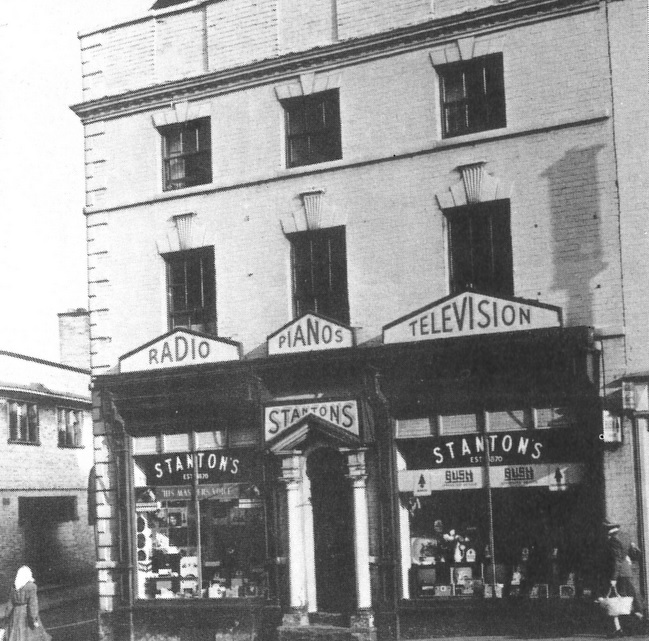
    We’ll be launching our public call-out for memories and objects relating to Stanton’s music shop (pre 1960) on Monday 5 February.

    But before that, we want to know if you have any personal stories about the shop which stood on Dudley’s Castle Street until the late 1950s when it was knocked down and replaced with a modern flagship store (incorporating the shop that is now Greggs).

    Likewise, do you have any objects that were purchased from there pre 1960 – records, sheet music or musical instruments?

    If you do have anything you would like to share to help in our recreation of Stanton’s, please pop in and see the Collections team in the Rolfe Street offices.


    A bit about Stanton’s

    James Stanton founded his piano tuning business in Tipton in 1870, and shortly after set up a “pianoforte and harmonium warehouse” on Owen Street. In 1895, he opened a shop at 10 Castle Street, in Dudley. By the 1950s, the shop was in the hands of his daughter-in-law Florence, her daughter Audrey Howarth, and a managing director, Frederick Nash. In the late 1950s, much of Castle Street was demolished for Dudley’s town centre redevelopment, including replacing the old, Georgian building with a brand new block. It is the older building that will be recreated in the Museum’s new 1940s-60s town centre.

    The shop sold a range of musical instruments, including their traditional pianos but also electric organs and electric guitars. They moved on from gramophones to sell radiograms, radios, televisions and record players, as well as records to play on them which could be tested at listening booths first.

    Why Stanton’s?

    Stanton’s enables us to talk about the music and culture of the Black Country in the 1950s, including the rise of rock’n’roll and changing fashions.

  • Vehicle Donation Drives Forward Our Fundraising Campaign

    Our Forging Ahead £1.9m fundraising campaign is off to an excellent start today thanks to the Patrick Foundation of Kings Norton who have pledged a gift of £500,000 towards the project plus a donation of five vintage vehicles from the Patrick Collection.

    Following the arrival of the Austin 10 and Alvis Speed 25 Saloon in December, the remaining three donated vehicles – a 1960 Morris Minor Van, a 1963 Daimler Dart SP250 Sports and a 1965 Daimler Majestic Major Saloon – arrived at the Museum today (Fri 5 Jan) and despite the wet weather, it was a wonderful sight to see them pulling in off the Tipton Road.

    The foundation has also pledged an annual donation of £30,000 per year for the next ten years to support the Museum and the maintenance of its heritage vehicle collection.

    In recognition of this generosity, we’re naming the lower ground floor of the new Visitor Centre ‘The Patrick Gallery’ and Jordan’s role as Junior Motor Mechanic will from now on be referred to as ‘The Patrick Foundation Junior Motor Mechanic’.

    The Patrick Foundation’s Trustee, Alexander Patrick CBE DL, is widely known for his charitable work and was awarded a CBE in 2012 that recognised his support for charities. The Patrick  Foundation has previously supported several of the Museum’s past projects, including our much loved access vehicle ‘Doris’.

    We envisage all five vehicles to be a regular feature of the new 1940s-60s town once it is built. For now, we will be housing them in existing Museum vehicle shelters.

  • New vehicles arrive

    The first two of five vintage vehicles have arrived at the Museum today, donated by The Patrick Foundation. The gift of the vehicles – a 1934 Austin 10 Patrick Special Saloon, AOA 282 and a 1939 Alvis Speed 25 Saloon, FOB 506 – forms part of a wider donation the Patrick Foundation will be making towards BCLM: Forging Ahead, details of which will be announced in the coming weeks.

    The remaining three vehicles are due to arrive at the Museum on Monday 11 December.

    The Alvis and Austin are temporarily being housed in the workshop of Bradburn & Wedge whilst a longer term location is sought for them.

    We envisage all five vehicles to be a regular feature of the new 1940s-60s town in the future.

    We won’t be announcing news of the donation externally until the new year, so please do keep this news internal only for now.

  • Diary Dates – BCLM: Forging Ahead drop-in sessions

    The first of the planning applications for BCLM: Forging Ahead is due to be submitted to Dudley Metropolitan Borough Council (DMBC) on Friday 8 December 2017.

    The application will include extensive project designs for the new Visitor Centre and new historic development, many of which you will have already seen. However, we will be holding two staff and volunteer drop in sessions at 9am on Thursday 14 December and Wednesday 20 December in which there will be an opportunity to view all of the designs that will be submitted as part of the application.

    Members of the project team will also be on hand to answer any questions you may have.

    Please feel free to drop-in during either session, both of which will take place at 9am in Hall 2 so that staff who work on site can attend before their working day.


    Other Forging Ahead related news

    We have recently updated the Forging Ahead FAQs – saved within the Museum documents tab above – in light of some recent questions. Please do take a look.


  • Free Entry for National Lottery Players

    On Saturday 18 November, we’re offering free entry to National Lottery Players as a thank you for the funding we’ve received from The Heritage Lottery Fund towards BCLM: Forging Ahead.

    All people will need to do is show their lottery ticket for draws between 13 & 26 November when they arrive at the Museum for free entry (Terms & conditions apply – see below).

    We hope that lots of people will visit – some of whom may never have visited before – so please give everyone on that day the same warm welcome as ever and let’s get them excited about Forging Ahead.


    Ts & Cs

    Valid for entry to the Museum on Saturday 18 November between 10am and 4pm only. Lottery ticket shown must be for a National Lottery game (including Lotto, Euromillions, Thunderball, Hotpicks and National Lottery scratchcards) between 13 & 26 November (proof of online National Lottery play valid). Each valid proof of play shown admits one person free of charge. Maximum of 5 proofs of play per party. Not valid in conjunction with any other offer. Free entry does not qualify for an UnChained Annual Pass.