




Manual handling operations are a significant contributor to workplace injuries, ill health, and lost time. Common injuries include muscle and ligament strains, hernias, slipped discs, joint injuries (to the knees, ankles, arms, and shoulders), as well as cuts and bruises to the hands, arms, and feet.
Employers have a duty, as far as is reasonably practicable, to minimise the need for manual handling where there is a foreseeable risk of injury. To mitigate these risks, mechanical aids such as cranes, forklift trucks (FLTs), sack trucks, and pallet trucks are provided.
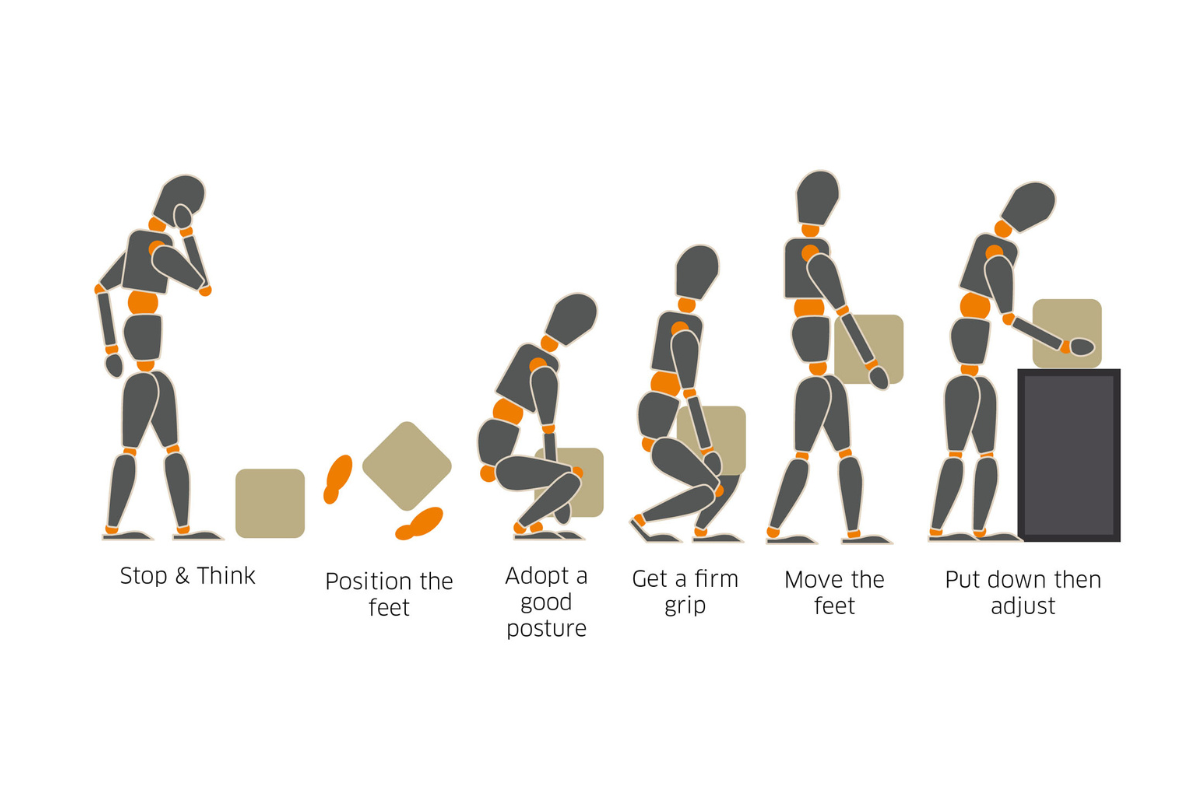
When assigned a task, follow these guidelines to ensure safety:
-
- Think and observe: Can I complete this task safely? Do I need extra equipment?
- Seek advice: Speak to your line manager if you are unsure.
- Use mechanical aids: Is there a device available to help?
- Check the environment: Is the area safe to complete the task? Do I need to clear space first?
- Push, don’t pull: Pushing is generally safer and more effective than pulling.
- Test the weight: Assess whether assistance is needed.
- Beware of sharp edges: Ensure the load is safe to handle.
- Clear the route: Make sure the pathway is free of obstructions.
- Maintain proper posture:
- Keep the load close to your body and avoid overreaching or stretching.
- Breathe normally throughout the task.
- Use your legs: When lifting or putting down a load, use your leg muscles as instructed during training.
- Avoid twisting: Keep your shoulders in line with your hips. If turning is necessary, move your entire body.
- Smooth movements: Avoid jerking motions; aim for controlled and steady actions.
- Never use untrained equipment: Only operate equipment you are trained to use.
Leave a Reply