Category: Key update

  • Black History Month Event: When I came to England

    Join us on Thursday 24 October for a celebration of Black History, where you will have the opportunity to listen to Z. Nia Reynolds, author, cultural curator and filmmaker.

    Her book ‘When I came to England’ portrays an oral history anthology of life in Britain during the 1950s and 1960s told by those who came in search of life, love and lifestyle…a long way from home. Full of hope, humour and honesty, this gives a fascinating insight into post-war British society. This event will inform and support the collection of Migration stories as part of our major development project, BCLM: Forging Ahead.

    Following the interval, we will host an authentic fashion show featuring garments worn during the 50’s and the swinging 60s. This fashion show gives an insight about the lives of Black people arriving in Britain at that time. Samantha Prescott, Artistic Director and Founder of ‘Fashion, Talent & Black History Showcase’ will share an informative account of what it was like for migrant communities at the time.

    Time: 7.00-10.30 pm

    For more information, and to book your place, please contact: Glenis Williams, Community Engagement Manager [email protected]

  • BCLM Forging Ahead: Laurie Thomas Hairdressers

    Black Country Living Museum is looking for memories from the 1950s of Laurie Thomas hairdressers – a barbers and ladies salon based in Burnt Tree, Tividale Road, Tipton. The Museum plans to recreate the hairdressers as part of its ambitious new development project BCLM: Forging Ahead.

    The recreated hairdressers will be set in 1956, and visitors will be able to learn about the growth of hairdressing, the rise of popular fashions and the changing role of women in society.

    Established in 1904, Laurie’s was well-known and much-loved within the local community.  The shop was opened by Joseph Thomas and was taken over by his son, Laurence Arden Roland Thomas, known to many as ‘Laurie’. The family tradition has been carried on with Laurie’s grandson running a traditional barbers to this day.

    Laurie’s shop was small but bustling, with only two chairs for cuts. After Laurie married Phyllis Orton in 1933, she went to Birmingham College to study hairdressing and opened up a ladies’ salon in the back room. She was later joined in the business by her daughter, Kay.

    The Thomases had a familial relationship with their customers; generations of families came through the shop doors, some of whom still go to the barbers to this day. Laurie was well known locally as a ‘character’ and was loved by everyone. He was always happy to help those in need and he had dreamed of working as a doctor but could not afford the training – however, his medical knowledge saved both his daughter’s life and that of a car accident victim. Male customers would be offered refreshments on busy Saturdays and on special occasions. Laurie also placed a radio on the top shelf in the window and brought out a television for customers to follow key events, such as the cup final. Ladies were offered tea and biscuits upon arrival and Phyllis would often put extra groceries into customer’s bags if she knew they needed them. Kay spent much of her childhood in the shop. She enjoyed the attention she received from Phyllis’ customers, and called many of them ‘aunty’.

    The post-war period saw new styles emerge in leading salons, often based around shorter hair than had been common before the war. However, this required more frequent, expensive haircuts and treatments. Therefore, in an age of austerity these styles were slower to catch on in areas such as the Black Country. The 1950s and 1960s saw tremendous growth in the hairdressing trade with working class women increasingly using hairdressers, spending more on their personal appearance than ever before.

    To help us in our recreation, we would love to talk to anyone with memories of the hairdressers. Do you remember Laurie Thomases? Did you or your parents go there to get the latest hair cut?

    Please get in touch with us by emailing: [email protected]  or call 0121 557 9643.

    For more information about BCLM: Forging Ahead, please visit: www.bclm.com/forgingahead .

  • Updating your personal information

    Don’t forget to inform the People & Culture team of any changes in personal details including a change of address, change in telephone number, updating emergency contact details and a change in bank account details. It is important that we have the most up to date and correct information on file.

    If you need to update any of your personal information, the relevant forms can be found under the ‘Documents’ tab above under ‘Forms: For Staff’ and should be sent to [email protected] on completion or passed onto a member of the People & Culture team.

    For details on how we use your personal information please refer to the Museum’s Data Protection Policy and Privacy Policy.

  • Pre Paid Flu Jab Vouchers

    The Museum is committed to providing a healthy working environment and improving the quality of working lives for all staff and volunteers. As part of our continuing efforts under the umbrella of ‘Health and Wellbeing’ of all our staff and volunteers, we are pleased to confirm that prepaid flu jabs vouchers are available for anyone wishing to have one. The vouchers are redeemable at Boots outlets.

    If you would like a voucher please contact any of the People & Culture team (Ben/Sukhi/Ricki/Hayley) based at Rolfe Street or feel free to approach us if you see us on site.

  • Team Manager Station Information

    A new team manager station chart has been added to the intranet documents folder following on from the appointment Anna Pavard and Alexandra Jolly.  It can be found in information/museum organisation/team manager distribution.

    The chart is also on display in Doo’s staff room and the Guide Hut.

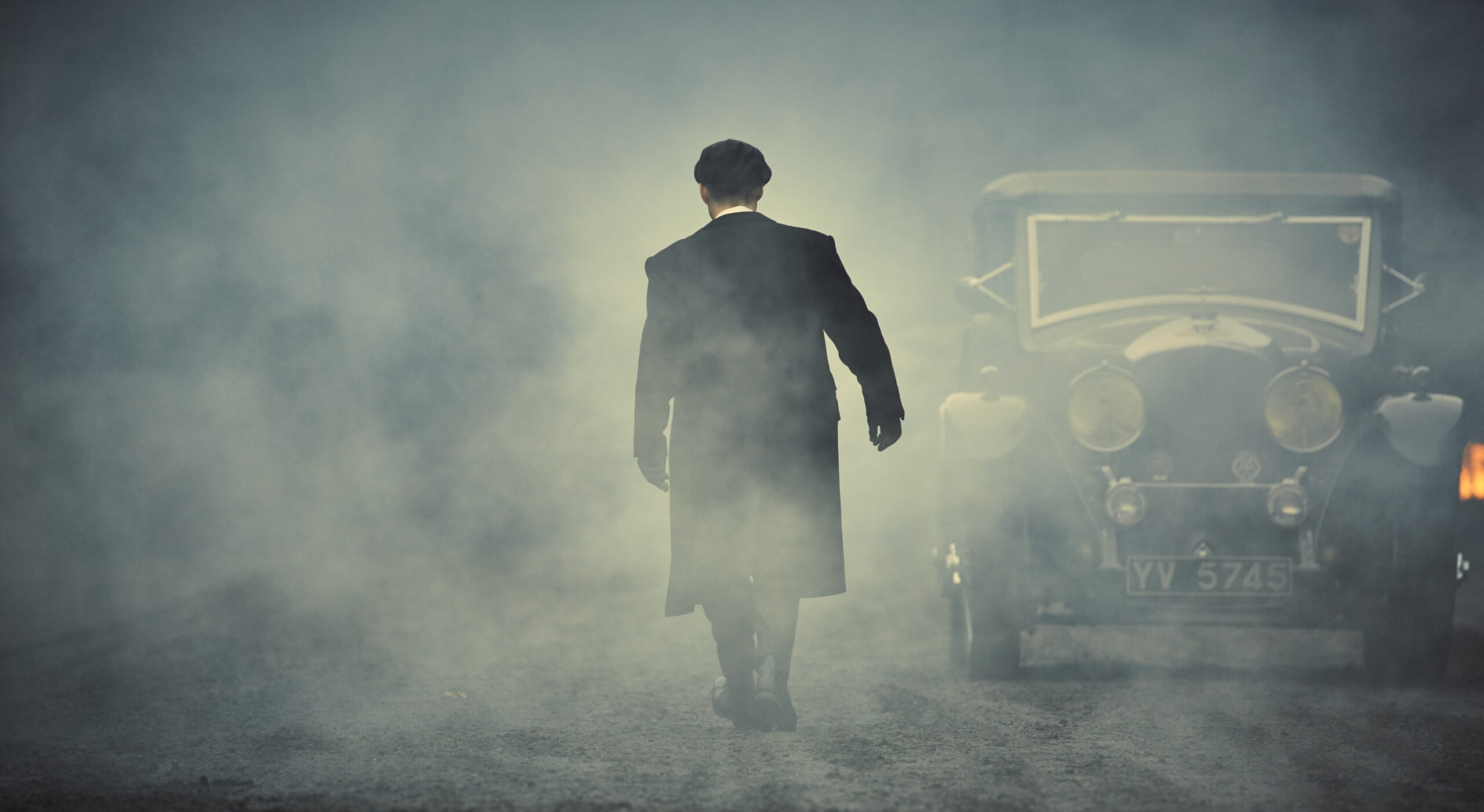
  • Thank you for making Peaky Blinders Nights a roaring success

    Thank you for making Peaky Blinders Nights a roaring success

    We love Peaky Blinders.  However, I am very conscious that the evenings put stresses and strains on us and the site.  I want to acknowledge that and say how appreciative I am of everyone’s efforts – whatever your role at the Museum – to make the evenings such a roaring success for our loyal visitors and fans of the show. 

    It seems that the phenomenon is set to endure for a few years to come, and we’ll hopefully, continue to be regarded as the home of Peaky Blinders.  Although I know it will be a welcome break until the next time.

    Thank you again.

    Andrew

  • BCLM: Forging Ahead – Dudley Civic Restaurant

    Black Country Living Museum is looking for memories from the 1940s to the 1950s of the Civic Restaurant that once stood on the corner of Fisher Street and Birmingham Street in Dudley from 1948 until the 1980s. The Museum plans to recreate the restaurant as part of its ambitious new development project BCLM: Forging Ahead. 

    The recreated restaurant will offer visitors to the Museum a chance to taste post-war life including National Bread and steamed jam puddings plus hearty British dinners highlighting the shortages and challenges of eating well in post war Britain.

    Purpose built in 1948 the Civic Restaurant in Dudley was part of a government led initiative to change popular wartime British restaurants into civic restaurants. These aimed to provide affordable and nutritious food without diners needing to use their precious personal rations and was particularly important in the Black Country as many companies were too small to run canteens for their workers.

    Prior to this, most British Restaurants had been located in makeshift venues like church halls, town halls and school buildings. Dudley’s were in church halls at St John’s Kate’s Hill, King Street Methodist, and St Christopher’s, on the Wren’s Nest estate. But a handful of councils looked at Civic Restaurants as an opportunity to build brand new, modern and efficient restaurants – Dudley was one of this pioneering group.

    The Civic Restaurant, built by the bus station to a modern pre-cast concrete design, was designed for mass dining, serving midday dinners, coffees, teas and evening meals for to up to 200 people at a time. The restaurant featured an open plan kitchen, a mural designed by local students from Dudley Technical College, coffee room and a terrace. In later years it was also hired out for private functions, dances and wedding receptions.

    Dudley’s Central Civic Restaurant was a great success to begin with, but as more prosperous times came to the Black Country, diners began to look elsewhere for less basic cuisine, and the restaurant began to struggle. Despite a revamp in 1954 as the Ednam Restaurant, with new menus, jukeboxes, and carpets, by 1956 it had become unprofitable, and closed later that year. The building was then used for several different council purposes following its closure, most notable as the home of the Black Country Museum Development Office from 1975-1984. The building was eventually demolished to make way for Dudley’s new bus station with many fixtures and fittings sold at public auction.

    Do you have memories of dining or attending a function in the restaurant in the 1940s to 1950s? Did you or anyone in your family eat, join in a celebration or work in the Civic restaurant? Can you remember the food, the decoration or even the mural?

    Please get in touch with us by emailing [email protected] or by calling 0121 557 9643.  For more information, visit www.bclm.com/forgingahead

  • A fantastic summer 2019

    A fantastic summer 2019

    We’ve had a tremendous summer. 

    The summer events and activities were very well received, including “Back in 10” written, directed and performed by our friends at Black Country Touring. The focus on Black Country heroes and heroines offered some lovely opportunities for story-telling.

    Attendance over the six-week holiday has been very strong as well; very nearly equalling the record-breaking summer of last year, despite some less than summery days, and significantly higher than the target we set ourselves.  It means 2019 continues to be another year of growth for the Museum, bringing value, relevance and enjoyment to tens of thousands of people. 

    The 5 late-night Fridays were particularly popular with 5,321 attending on the £5 ticket (2018: 3,635), equivalent to a 46% increase year-on-year.  The success of these evenings in reaching new audiences is making us wonder how we can make Summer Lates bigger and better for next year. What do you think?

    So, as we enter the autumn/winter months, including a packed events programme, starting this weekend with our Peaky Blinder evenings, the year-to-date attendance position is that we are currently 6% ahead of forecast, at 243,185, and 1% ahead of the same point last year.

    My very grateful thanks and appreciation for what is always an intense time for the Museum.

    Andrew

  • Fuel Card Update

    Please note that the following vehicles now have their own fuel cards which are kept in the glove box (same as the pool car). This will enable staff to re-fuel as necessary while out and about at Tesco, Morrisons & Sainsbury’s forecourts. Details on how to do this will be found in the use log folder.

    The cards are specific to each vehicle with the registration number clearly shown.

    • Small Peugeot Van – KM06 CEY (Petrol)
    • Large Citroen Van – LB64 GXM (Diesel)
    • Land Rover – Y872 GAA (Diesel)

    Can I please ask that if you do take any of the modern vehicles off site don’t return them with less than a quarter of a tank of fuel, this goes for the pool car as well.

    David Pitt

  • Collections Update – Research

    Research:  we are trialling a new process for research. As such, from Monday 22 July 2019 the following will be in place:

    • Appointments to carry out research will be limited to two periods every week. These will be Wednesday mornings between 9am and 1pm, and Thursday afternoons, from 1.30 to 5pm.
    • A notice period for research requests for both staff and external researchers will come into effect.  Therefore, should you wish to access an item from the archive and/or library to carry out research, we kindly ask that you give at least one week’s notice from the date you hope to access the information (in line with the above allotted times). This will allow the necessary time to prepare the requested information. 

    All requests to carry out research should be made to the Museum’s Archivist & Librarian Karen directly at [email protected]